I. Background
In 2026, candidemia remains highly prevalent among immunocompromised populations in ICUs, oncology wards, transplantation units, and post-surgical patients. Key clinical challenges include:
1. Early signs of Candida infection (fever, hypotension, organ dysfunction) closely mimic bacterial sepsis, making rapid differentiation difficult.
2. Conventional blood cultures require 24–48 hours for initial positivity and 72–96 hours for full identification and susceptibility testing; prior antifungal therapy significantly reduces the recovery of viable organisms, leading to delayed diagnosis and treatment.
3. There is a lack of rapid, specific screening tools to distinguish infection from colonisation early, hindering the timely identification of high-risk patients.
There is an urgent clinical need for rapid, highly specific serological and molecular assays to aid early recognition and differential diagnosis.
II. Clinical Significance
Mannan antigen (Candida Ag) and anti-mannan IgG antibody (Candida Ab) are complementary, Candida-specific serological markers. Their individual and combined clinical values are outlined below.
(A) Core clinical value of Candida mannan antigen (Candida Ag)
1. Early rapid screening – Results available within 1–3 hours, much faster than blood cultures, enabling early identification of suspected invasive candidiasis and timely intervention.
2. Infection risk stratification – Negative results in low-to – intermediate risk patients can help rule out active Candida infection; positive results prompt further work-up with blood cultures and imaging for deep-seated fungal infection.
3. Dynamic monitoring – Serial measurements assist in assessing disease progression and therapeutic response.
4. Superior specificity over broad-spectrum G test – Targets Candida – specific markers, with fewer interferences (e.g., dialysis, dressings, albumin infusions) and lower false-positive rates.
(B) Core clinical value of anti - mannan IgG antibody (Candida Ab)
1. Filling the detection gap in mid - to - late infection – Antibody levels rise progressively from day 3–7 post - infection and remain positive during convalescence, compensating for the decline in antigen levels after antifungal therapy.
2. Distinguishing colonisation from invasive infection – Simple mucosal or skin colonisation usually shows only low - titre antibody positivity, while invasive candidiasis often presents with persistently high antibody titres.
3. Long - term therapeutic follow - up – Declining antibody titres indicate effective treatment, while persistently elevated or rising titres suggest residual infection or risk of relapse.
(C) Core value of combined antigen–antibody testing
1. Complementary detection windows – Extending the overall detectable period and reducing missed diagnoses.
2. Improved diagnostic performance – Combined interpretation enhances both sensitivity and specificity, lowering false - positive and false - negative rates of single markers.
Clinical interpretation notes:
This is an ancillary screening tool; it cannot be used alone for definitive diagnosis.
It does not differentiate Candida species.
In high - risk patients (e.g., neutropenia, post - transplant) with strong clinical suspicion, a negative antigen result does not exclude candidemia; additional testing is required.
In severely immunocompromised patients (e.g., neutropenia, early post - solid organ or haematopoietic stem cell transplantation), humoral immune responses are often blunted; IgG antibodies may be absent, delayed, or produced at low levels. In such populations, a negative IgG result must not be used to rule out infection; decisions should rely primarily on antigen and molecular test results, integrated with clinical findings.
Both antigen and antibody levels are influenced by individual immune status, fungal burden, and metabolic clearance. Serial trend monitoring provides greater clinical value than a single measurement.
III. Comparison of Current Mainstream Candida Detection Methods
| Assay | Turnaround Time | Core Advantages | Clinical Limitations | Indications |
| Fungal blood culture | 24–72h | Gold standard; allows species identification and susceptibility testing | Slow; sensitivity markedly reduced after antifungal therapy | Proven, susceptibility testing |
| (1,3 – β – D – glucan) | 1–3h | Broad coverage of Candida, Aspergillus, and Pneumocystis | Multiple interferences, false positives; not Candida – specific | Pan – fungal screening across hospital |
| Candida mannan Ag detection | 1–3h | Candida‑specific target; fewer interferences; suitable for batch screening | Cannot speciate; limited sensitivity as a single marker | Initial screening and risk stratification for Candida infection |
| Candida mannan antibody detection | 1–3h | Reflects host immune response; combined with antigen improves sensitivity | Significantly reduced sensitivity in severely immunocompromised (neutropenia, early transplant); cannot distinguish current from past infection alone | Supplementary screening in non – severely immunocompromised patients; combined with antigen for auxiliary diagnosis |
| PCR | 2–4h | Direct identification of multiple pathogenic Candida species; low LOD | Requires specialised laboratory sections and trained personnel | Definitive species identification in complicated/severe cases |
IV. Dynamiker’s Comprehensive Multi - Methodology Candida Detection Portfolio
Dynamiker has established a dual – platform system integrating immunodiagnostics and molecular diagnostics, offering five major solutions: POCT chemiluminescence, ELISA, fluorescence immunochromatographic POCT, and real – time multiplex PCR. These are complemented by paired antigen and antibody reagents, with the innovative Candida Ag + IgG Ab panel testing designed for overseas markets, catering to diverse clinical needs across hospital levels.
(A) Summary table of methodologies, products, advantages, and applications
| Methodology | Core Products | Key Advantages | Target Markets & Clinical Scenarios |
| ELISA | Candida Mn Ag;Candida IgG Ab;BDG | Low reagent cost; mature, easy – to – use technology | Routine batch screening |
| POCT FIA | Candida Mn Ag;Candida IgG Ab;BDG | Results in 20 minutes; simple equipment; single – use, ready – to – run | Emergency, fever clinics, primary hospitals for rapid triage; bedside screening in resource – limited settings |
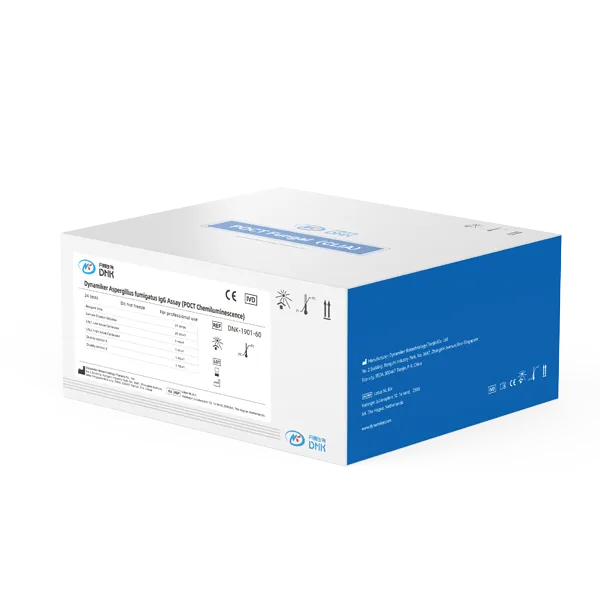
| POCT CLIA | Candida Mn Ag;Candida IgG Ab;BDG | Compact integrated devices; no large automation lines; single – sample random access; results in 30 minutes; CE – marked | Overseas hospitals, overseas primary clinics; emergency/ICU bedside quantitative |
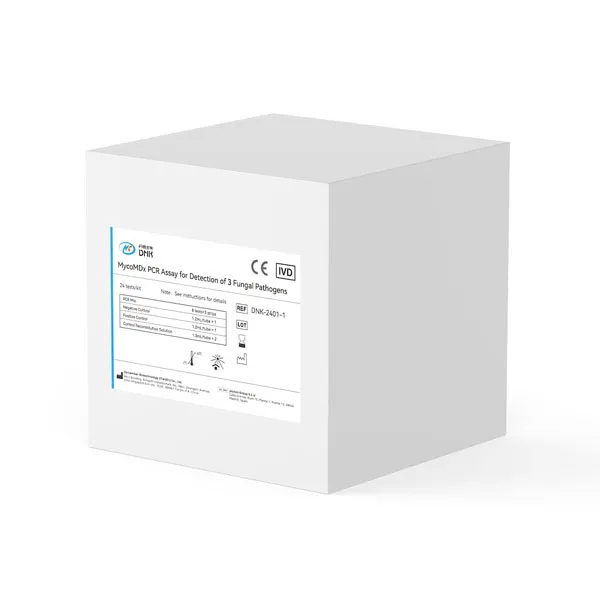
| Real – time multiplex PCR | Candida multiplex PCR kit (covering C. albicans, C. glabrata, C. tropicalis, C. krusei, C. parapsilosis) | Low LOD; not significantly affected by prior antifungal therapy; simultaneously differentiates multiple Candida species; includes internal controls to prevent false negatives | Complicated/severe cases, immunocompromised high – risk patients, nosocomial infection source tracking, guiding targeted antifungal therapy |
(B) Candida antigen–antibody combination testing strategy
1. Combination format: Simultaneous detection of mannan antigen (Mn – Ag) and anti – mannan IgG antibody (Mn – IgG).
2. Clinical added value:
Complementary window periods – Antigen rises early in infection, while antibodies remain positive in later stages, significantly extending the overall detectable window.
Enhanced diagnostic efficacy – Compensates for the limited sensitivity of antigen alone, improving overall sensitivity and specificity, reducing both false negatives and false positives.
Aiding differentiation of colonisation from invasive infection – Simple colonisation usually yields single – marker low – level positivity, whereas invasive candidiasis often presents with concurrent significant elevation of both antigen and antibody, supporting clinical differentiation.
3. Clinical applications: Baseline screening of high – risk immunocompromised patients upon admission; differential diagnosis of unexplained sepsis; dynamic post – treatment efficacy follow – up; combined diagnosis of suspected deep – seated candidiasis.
(C) Stratified combination diagnostic protocols
1. Routine screening in tertiary hospitals: Triple serological panel “G test + Candida antigen + antibody” using chemiluminescence, suitable for large – scale screening of hospitalised high – risk patients.
2. Emergency rapid triage (universal): POCT antigen – antibody rapid test using fluorescence lateral flow for quick initial screening.
3. Complicated/severe cases: Serological antigen – antibody combination plus multiplex PCR for species identification, balancing screening efficiency with precise pathogen characterisation.
Summary
Dynamiker offers a full range of Candida detection products across POCT chemiluminescence, ELISA, POCT lateral flow, and real – time PCR platforms. By combining serological antigen – antibody pairing with molecular nucleic acid typing, the company addresses the limitations of single assays and meets diverse clinical needs – from large – scale routine screening, to emergency bedside testing, to precise characterisation of complex cases. This stratified, accurate, and comprehensive diagnostic solution for invasive candidiasis serves healthcare institutions worldwide.
 English
  中文
中文 français
  Deutsch
  Español
  русский
  português
  العربية